Indigenous Placekeeping Along the Credit Valley Trail
The Credit River Valley is home to the Mississaugas of the Credit First Nation (MCFN) and a gathering place for many Indigenous Peoples. Guided by Anishinaabe Elders and Knowledge Keepers, the Doodem (Clan) sites created and planned along the Credit Valley trail brings these stories to life through the creation of gathering spaces, art, and teachings. Each Doodem site invites you to pause, reflect and connect — with the land, with culture, and with the voices that continue to shape this valley.
You can learn more about the Indigenous Experience Plan here.
How You Can Support Indigenous Placekeeping Along the CVT
Make an online donation
You can visit cvcfoundation.ca/donate/cvt today to make an online donation and help us continue to raise the necessary funds for this important work!
Make a donation via mail or phone
You can download our printable CVCF donation form and return with your cheque or money order, or call 905-670-1615 to make a donation by credit card.
Get your business or community organization involved
You have the opportunity to make a direct and meaningful impact in our community. Whether through sponsorships, donations, in-kind services, or volunteers, there are countless ways we can collaborate to support Indigenous placemaking along the CVT. To explore how you can get involved, please contact: Dayana Gomez, Executive Director, Credit Valley Conservation Foundation
The Indigenous Experience Plan
Learn About the Sites
At the heart of the CVT’s vision is the integration of Indigenous perspectives, knowledge and cultural expressions. In 2017, Credit Valley Conservation (CVC) partnered with the Mississaugas of the Credit First Nation (MCFN) and other Indigenous community members to establish the CVT Indigenous Roundtable (IRT)—an Indigenous-led advisory group composed of representatives from MCFN, Cree, Huron-Wendat, and other First Nations.
In 2019, the IRT, in partnership with CVC, finalized the Indigenous Experience Plan (IEP). This plan outlines a vision for the creation of seven key sites along the CVT, each representing an Anishinaabe doodem (clan) and serving as a focal point for storytelling, teachings and cultural engagement. These sites will feature interpretive signage, public art installations and gathering spaces designed to foster understanding and appreciation of Indigenous heritage and culture.
The first key site— Ajijaak Doodem, The Crane Gathering Space—is now complete, and design is underway for the second site: Giigoonh Doodem – The Fish Site. Planning for the remaining five sites will continue over the coming years as part of this shared and evolving vision.
Interpretive Signage at the Crane Gathering Space
Credit Valley Conservation has installed interpretive signage at the Crane Gathering Space at Island Lake Conservation Area. This project received Government of Canada support through the Federal Development Agency for Southern Ontario (FedDev Ontario).
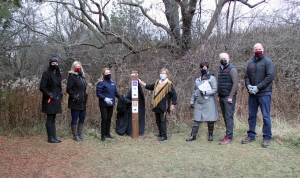
Credit Valley Trail sign unveiling took place at Upper Credit Conservation Area with project partners
Support the CVT’s Indigenous Vision
How We’re Growing
As the CVT continues to grow, each of the remaining five key sites will be thoughtfully developed to reflect the diverse cultural narratives and spiritual connections of Indigenous communities. Through these efforts, the CVT aims to honour the past, celebrate the present, and build a shared future grounded in respect, understanding, and collaboration. You can help support the development of these important cultural spaces—donate today.
How To Get Involved
Interested in getting involved with the Credit Valley Trail or support these transformative initiatives?
Please contact Natalie Faught, Credit Valley Trail Coordinator.
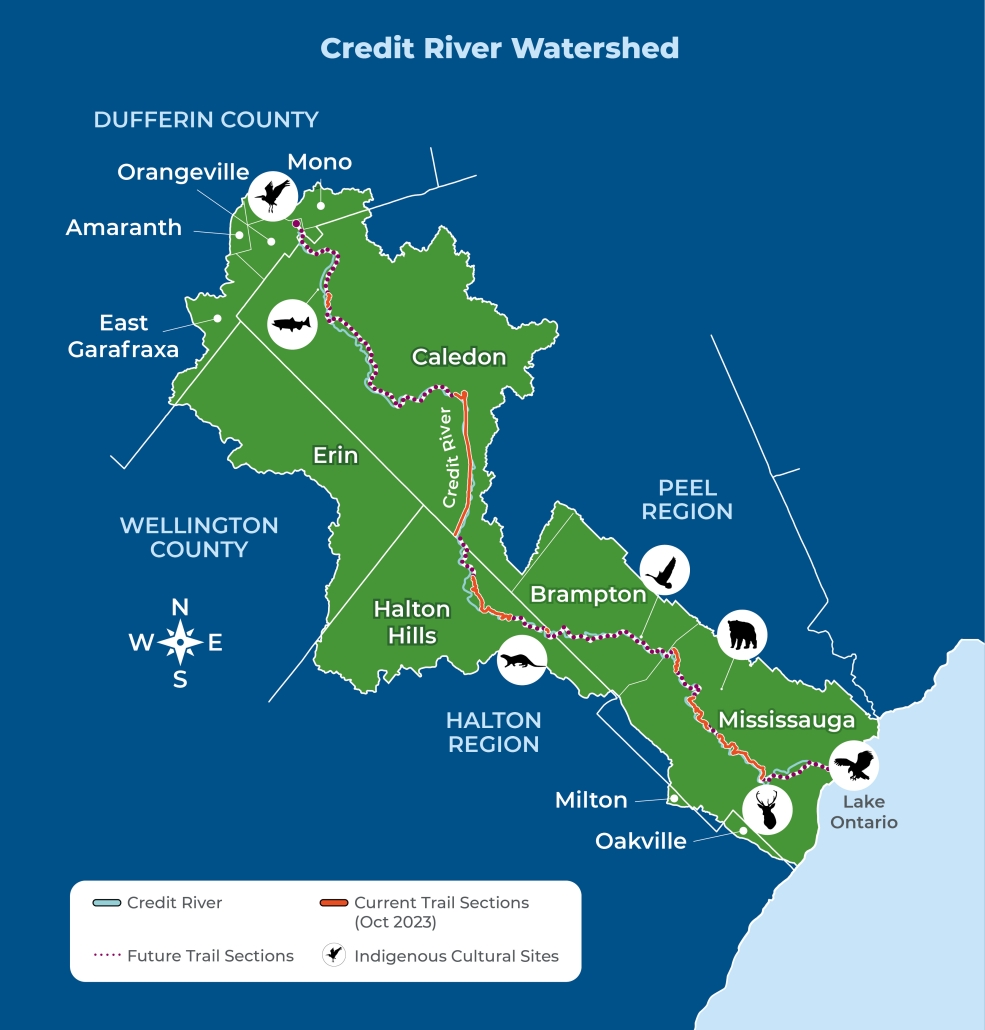
CVT Indigenous Experience Plan Overview – Concept Map for Seven Key Sites
Following the Indigenous Experience Plan, the IRT have identified seven key sites to be constructed along the CVT route. Each site will be represented by an Anishinaabe dodem (clan system) and incorporates an Indigenous experience narrative that includes storytelling, teachings, symbology and other cultural elements.
CVC and the IRT are currently developing Key site #1 and #2.
Placekeeping Priorities
Ajijaak Doodem – The Crane Gathering Space
Located at CVC’s Island Lake Conservation Area and marking the northern trailhead of the Credit Valley Trail, the Crane Gathering Space is the first of the seven Indigenous Experience Plan sites.
Inspired by the Ajijaak (Crane) Doodem—a symbol of leadership and communication in Anishinaabe culture—this space reflects the Crane’s role as the clan’s speaker: a powerful messenger that brings clarity, announces change, and leads with wisdom.
The architectural design draws on the symbolism of the Crane and incorporates elements of traditional fishing practices. This symbolism is echoed in the natural migration of the Sandhill Crane, which stops at Island Lake each year, linking the site to the land’s seasonal rhythms.
Built in 2024, the Crane Gathering Space now serves as a venue for ceremonies, teachings, and community events that honour Indigenous presence and tradition.
Inquire about booking or learn more about the space.
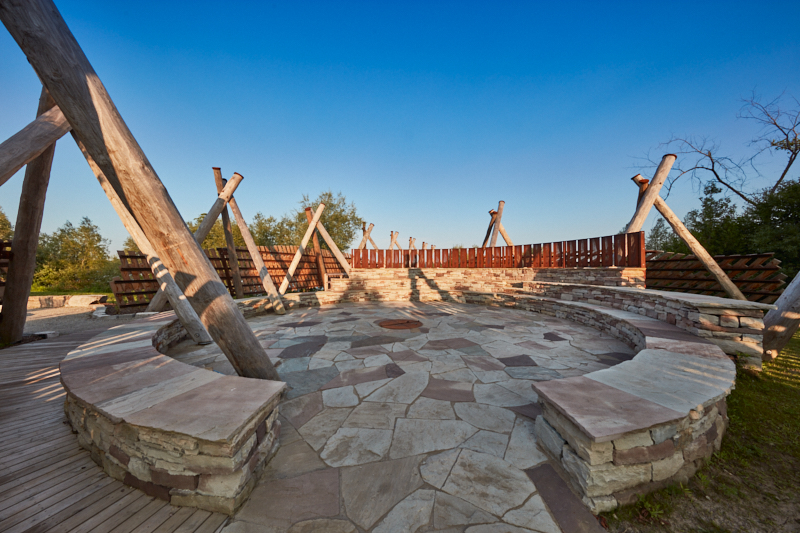
Photo credit: Smoke Architecture and Francis Fougere


Giigoonh Doodem – The Fish Site
The second key site, representing the Giigoonh (Fish) Doodem, is currently being developed at CVC’s future Charles Sauriol Conservation Area.
In collaboration with the Indigenous Roundtable, CVC is shaping a concept that weaves together the Grandfather Teachings with ecological stewardship—highlighting the importance of protecting brook trout habitats and acknowledging the historic presence of salmon in the area.
Watch the video, where Elder Garry Sault of the Mississaugas of the Credit First Nation shares the Grandfather Teachings and their connection to “the laws of the fish.” Elder Garry is Chair of the Indigenous Roundtable and a respected Elder of MCFN.
Stay tuned for updates as the site design continues to evolve.
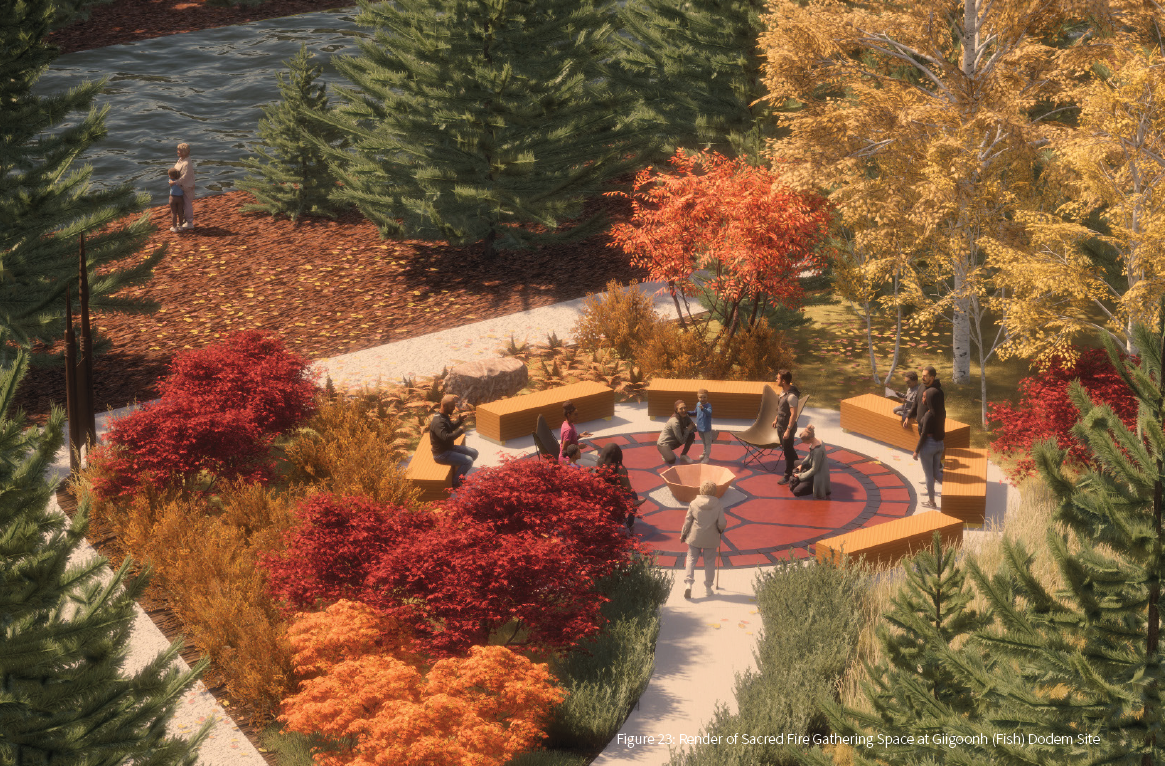
Conceptual renderings for the future Giigoonh Doodem, Fish site.
Interested in getting involved with the Credit Valley Trail or support these transformative initiatives?
Please contact Natalie Faught, Credit Valley Trail Coordinator.